

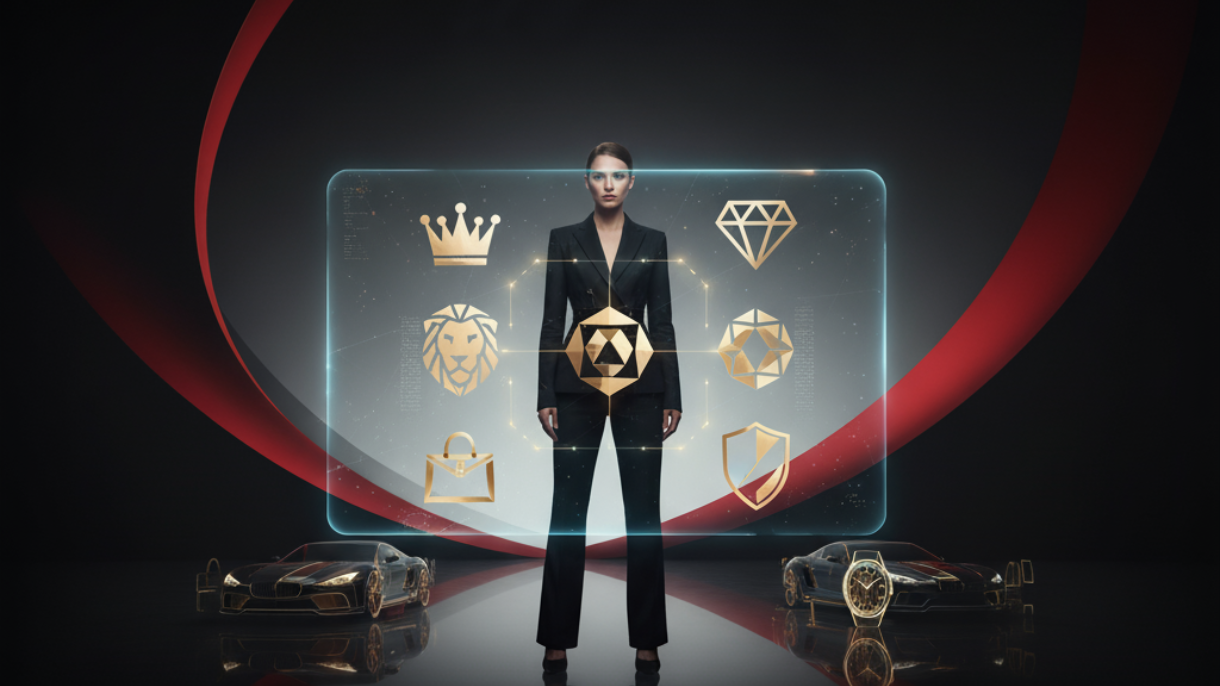

Luxury is not about being different. It’s about being desired for your difference.
Luxury brands don’t compete on price — they compete on perception. The world’s most powerful brands — from Hermès and Rolex to Tesla and Dior — didn’t just sell products; they claimed a psychological territory and defended it with precision.
In today’s saturated marketplace, building a luxury brand isn’t merely about premium materials or heritage. It’s about owning a category, creating cultural meaning, and becoming irreplaceable in the eyes of your ideal customer.
In this guide, you’ll discover how world-class luxury brands achieve dominance — and how you can strategically position your own brand to do the same. We’ll explore psychological frameworks, category design, brand storytelling, and the subtle art of perception management that drives desire and exclusivity.
What Makes a Brand “Luxury”?
Luxury begins where necessity ends. But defining it is more nuanced.
A luxury brand is built around three pillars:
- Exclusivity – Limited access creates perceived scarcity and value.
- Symbolism – The brand represents status, achievement, or taste.
- Consistency – Every detail reinforces quality, from packaging to customer interaction.
According to Bain & Company, global luxury sales surpassed $370 billion in 2024, and over 70% of purchases were emotionally influenced rather than functional. This emotional currency is what keeps luxury brands resilient, even in economic downturns.
Luxury brands don’t just sell objects — they sell identity.
Positioning Matrix for Luxury Segments
Understanding where your brand fits in the luxury spectrum is essential before crafting your positioning strategy.
Here’s a simplified Luxury Positioning Matrix to help you visualize market placement:
| Segment | Price Level | Target Buyer Mindset | Brand Examples | Positioning Focus |
|---|---|---|---|---|
| Accessible Luxury | $$ | Aspiring, image-conscious | Michael Kors, Coach | Affordable exclusivity |
| Aspirational Luxury | $$$ | Success-driven, experience-focused | Tesla, Montblanc | Innovation & prestige |
| True Luxury | $$$$ | Heritage-driven, elitist | Hermès, Rolex | Legacy, craftsmanship |
| Ultra Luxury | $$$$$ | Collectors, connoisseurs | Bugatti, Patek Philippe | Timeless rarity & artistry |
Each segment demands a unique positioning strategy — but the constant across all levels is emotional differentiation.
Archetypes & Premium Buyer Personas
Luxury marketing thrives on psychological archetypes — timeless narratives that connect brand identity to human emotion.
Here are the most common archetypes luxury brands embody:
- The Ruler – Power, control, prestige (e.g., Rolex, Rolls-Royce)
- The Creator – Innovation, imagination, artistry (e.g., Apple, Bvlgari)
- The Explorer – Freedom, discovery, self-expression (e.g., Montblanc, Land Rover)
- The Lover – Sensuality, passion, beauty (e.g., Chanel, Dior)
Mapping Buyer Personas
To resonate deeply, align your buyer persona with your chosen archetype.
Example:
A “Creator” brand targeting visionary entrepreneurs should build campaigns around innovation and individuality, not discounts or convenience.
The ultimate goal: make your buyers feel like they are part of an exclusive tribe, not just customers.
Crafting a Distinctive Brand Promise
A luxury brand promise isn’t about speed or affordability — it’s about transformation.
When crafting your promise, consider:
- Emotional Core: What deep feeling does your brand evoke?
- Cultural Relevance: Does your promise align with evolving values (sustainability, craftsmanship, minimalism)?
- Longevity: Is your message timeless or trend-based?
Example of Distinctive Promises:
| Brand | Promise | Emotional Trigger |
|---|---|---|
| Hermès | “A legacy of craftsmanship.” | Heritage & pride |
| Tesla | “Accelerating the world’s transition to sustainable energy.” | Progress & rebellion |
| Louis Vuitton | “Art of travel.” | Discovery & sophistication |
Your brand promise must be a north star — guiding every design choice, collaboration, and campaign.
Iconic Visual Identity: The Silent Influence
Luxury brands speak visually before they ever speak verbally.
Typography, color, and logo simplicity are the non-verbal codes of luxury.
Common Luxury Visual Traits:
- Minimal color palette (black, gold, white, or muted tones)
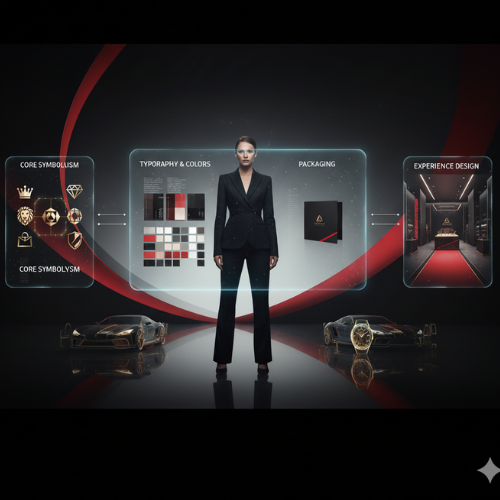
- Serif or custom typography symbolizing elegance
- Clean spacing and high-end photography
- Subtle animations or textures
This hierarchy ensures that every touchpoint, from website UX to unboxing, reinforces the same elite perception.
Design is the language of desire. Luxury brands master it fluently.
Founder Storytelling & Brand Mythology
Every legendary luxury brand has a myth — a timeless narrative that humanizes the brand and fuels its desirability.
For example:
- Coco Chanel transformed simplicity into rebellion.
- Ferruccio Lamborghini turned personal frustration into power and performance.
- Christian Dior rebuilt post-war confidence through couture elegance.
Your founder story should not just explain how the brand started but why it deserves to exist.
Components of a Compelling Brand Myth:
- Origin with Emotion – A challenge, dream, or passion.
- Transformation – The “aha” moment of creation.
- Cultural Impact – How it redefined its category.
Storytelling elevates your brand from a business into a cultural icon.
The Power of Repetition in Luxury Messaging
Repetition builds familiarity. Familiarity builds trust. In luxury, trust equals desire.
Think of Cartier’s recurring red box, Apple’s minimalist campaigns, or Gucci’s monogram patterns — all strategic reinforcements of identity.
Key strategies to master repetition:
- Repeat your core values in every channel.
- Use consistent visual cues (fonts, tones, filters).
- Create signature phrases or experiences (e.g., “LV Travel,” “Rolex Time”).
Luxury brands don’t chase trends — they repeat excellence until the world recognizes it as culture.
Setting Up Category Barriers Competitors Can’t Cross
Owning a category requires building barriers that protect your brand’s territory.
Types of Category Barriers:
- Emotional Barriers – Deep emotional attachment that no new brand can replicate.
- Cultural Barriers – Embedding your brand in rituals or traditions.
- Design Barriers – Proprietary design elements or patterns (like Burberry checks).
- Distribution Barriers – Selective access to enhance rarity.
These barriers make imitation costly and authenticity priceless.
Example: Ferrari limits production intentionally, ensuring that exclusivity itself becomes part of its market moat.
Premium Perception Through UX, Packaging & Access
A luxury product’s value often lies in its presentation.
Packaging and user experience (UX) should evoke anticipation and pride.
Core Elements of Premium Perception:
- Tactile Sensation: High-quality textures, weight, and finishes.
- UX Minimalism: Seamless, slow, intentional digital journeys.
- Access Control: Invite-only events, private viewings, or exclusive memberships.
Example:
Apple’s unboxing experience is studied in MBA programs — because it feels luxurious even before you use the product.
Brand Partnerships That Elevate Status
Strategic partnerships amplify credibility and visibility.
Luxury brands often collaborate with equally prestigious or culturally relevant partners to enter new markets while maintaining exclusivity.
Smart Collaboration Examples:
| Brand | Partner | Impact |
|---|---|---|
| Balenciaga | Crocs | Bridged luxury with pop culture irony |
| Louis Vuitton | Supreme | Captured Gen Z attention |
| Ferrari | Richard Mille | Reinforced engineering excellence |
Tip:
Always collaborate upwards — never dilute exclusivity by partnering with mass-market brands.
Famous Luxury Positioning Transformations
Luxury evolution often involves a strategic repositioning that redefines public perception.
| Brand | Old Image | Repositioned As | Key Strategy |
|---|---|---|---|
| Gucci | Outdated & rigid | Bold & youth-driven | Creative Direction (Alessandro Michele) |
| Burberry | Overexposed | Heritage-revived classic | Visual rebranding, heritage storytelling |
| Tesla | Tech innovation | Lifestyle luxury | Emotional connection through mission |
| Apple | Computer company | Design-first luxury tech | Experience over specifications |
The takeaway?
Luxury is not a label — it’s a long-term narrative adjustment that must evolve with culture while staying true to core values.
Conclusion: Building a Category You Own
Owning a luxury category means being synonymous with its core value.
Just as Rolex means time mastery and Hermès means artisanal heritage, your brand can achieve the same — if you blend emotional storytelling, visual discipline, and unwavering quality.
Remember:
- Positioning starts in the mind, not the market.
- Exclusivity is designed, not declared.
- The real luxury is consistency.
Luxury dominance isn’t about being loud — it’s about being undeniably distinct.
Focus on category language — define new terminology around your brand (like “quiet luxury” or “tech couture”). When you name the trend, you own the trend.