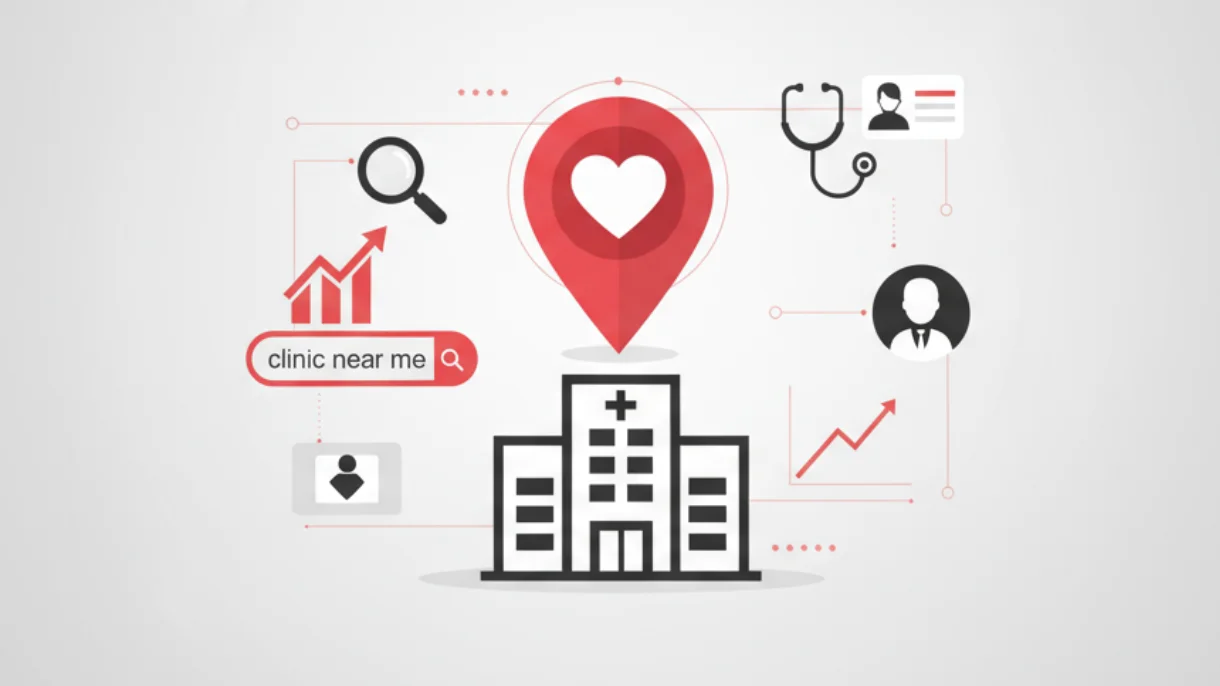
In today’s digital-first world, even the most advanced healthcare services can go unnoticed if not visible online. Local SEO is the bridge between patient needs and medical expertise.
Getting discovered locally isn’t just a marketing benefit for healthcare facilities — it’s a lifeline for sustainable growth. Whether you’re a solo practitioner, part of a multispecialty clinic, or managing a hospital network, your ability to attract, engage, and convert local patients depends heavily on how your presence appears in local search results.
When someone nearby searches for “best child specialist near me” or “emergency hospital open now,” Google shows them a map, a list of top-rated clinics, and detailed business profiles. The results are fast, accurate, and highly influential in the decision-making process. This shift has made Local SEO a critical strategy for health care providers to remain competitive, accessible, and trustworthy in their service areas.
But many clinics still struggle to implement local SEO correctly. Common issues include inconsistent listings, poor reviews management, or even a missing Google Business Profile. In this blog, we’ll break down the methods, tools, and strategies that can turn your practice into a top-ranking healthcare provider in your locality.
Let’s explore.
Importance of Local SEO in Health Care
For the healthcare industry, the stakes are higher than clicks or traffic. It’s about serving your community when they search for urgent or specialized medical help. Over 73% of patients look for health-related information online before visiting a provider, and nearly 65% choose a healthcare facility based on online reviews and search visibility.
Patient Search Behavior
Patients commonly turn to:
- “Nearby” searches: “dentist near me”, “MRI scan in [city]”
- Map listings: Google Maps results for quick directions
- Healthcare comparison: Ratings, reviews, opening hours, and services
Targeted Local Keywords
Using locally relevant phrases helps your website and profiles appear when patients look for care in your area. Example keywords include:
- “physiotherapy clinic in [area name]”
- “24/7 emergency hospital [city name]”
- “Best gynecologist near me”
By integrating these keywords into your website, profiles, and content, you align your online presence with the search intent of your target audience.
Google Business Profile Optimization
A well-optimized Google Business Profile (GBP) is one of the most powerful assets for clinics and hospitals. It allows your practice to appear in Google Maps and local search results—right where patients are looking.
Build Trust with Visual Presence.
Photos
Why it matters:
High-quality photos instantly build trust and create visual familiarity with visitors.Optimization tip:
Use real, high-resolution images of your facility, team, and services—avoid generic stock photos.
Establish Credibility & Local Authority
Reviews
Why it matters:
Customer reviews strengthen credibility and improve local search visibility.Optimization tip:
Encourage satisfied customers to leave reviews and respond professionally to every review.
Communicate Expertise Clearly
Services
Why it matters:
Clear service information helps visitors quickly understand your specializations.Optimization tip:
Organize services into clear categories and add concise but detailed descriptions.
Make sure to update hours, appointment links, holiday hours, and more.
On-Page SEO Strategies –
Local on-page SEO reflects how well your website is aligned with local queries and optimized for search engines. This is where clinics often miss out on easy wins.
Meta Tags, Headings, Keywords
- Meta Title: Use location service e.g., “Skin Specialist in Dhanmondi, Dhaka | ABC Clinic”
- Headings: Add local-specific heading variations e.g., Pediatric Care in Gulshan with 24/7 Support
- Keywords Placement: Naturally incorporate local terms in URLs, headings, body content, image alt tags
NAP Consistency Across Platforms
NAP stands for Name, Address, Phone Number — the core details Google checks across platforms to validate your business identity.
Name, Address, Phone
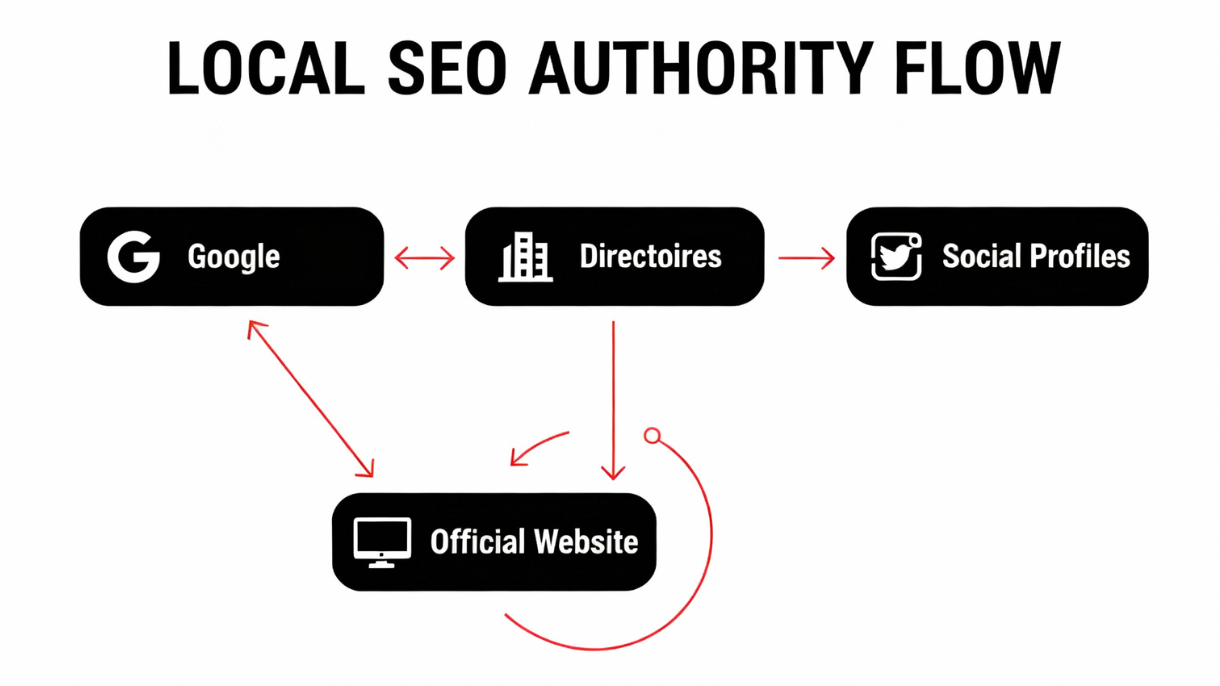
- Keep NAP identical on Google, Facebook, Website, Directories, LinkedIn, etc.
- Avoid variations like “St.” vs “Street” or “ABC Clinic” vs “ABC Healthcare Clinic”
How Google Validates NAP
Even a small inconsistency leads to loss of ranking authority.
Patient Reviews & Reputation Management
Reviews are the new word-of-mouth. For medical practices, they are especially impactful.
Monitoring, Responding
- Use platforms like Google, Health grades, Practo, Facebook to monitor reviews
- Respond to all reviews: Positive and Negative ❗ (Use empathy, offer resolution)
Quick Tips:
- Create automated request flows post-visit (SMS, WhatsApp, Email)
- Display testimonials on your website for added social proof
Content for Local Search
Local content builds authority and relevance. Your blog, FAQs, and service pages can rank not just for medical queries — but localized keywords too.
Blog, FAQ, Services Pages
Examples:
- “How to Choose the Right Pediatrician in [City]”
- “Best Time to Visit a Cardiologist in [Location]”
- Add city/town-specific case studies and FAQs
Mobile & Voice Search Optimization
Over 60% of health searches are done on smartphones. Local voice searches like “closest blood test center” are also growing.
Responsive Design, Speed
- Ensure Fast Load Speed (<2.5 sec)
- Use Click-to-Call buttons, Appointment links
- Optimize for voice queries like “Who is the best neurologist in my area?“
Bonus: Add structured data (Schema) to appear in voice results and rich snippets.
Local Link Building
Build authority in your local niche through strategic partnerships.
Directories, Partnerships
- Submit to credible health and local directories
- Build relationships with local gyms, pharmacies, NGOs for shared blogs or sponsorship
- Get backlinks from local press/media (Patient success story features)
Local Directories to Target:
- Google Maps
- Bangladesh Medical Directory
- Yellow Pages
- Chamber of Commerce listings.
Conclusion
Local SEO is not just another digital tactic — it’s a patient-centric strategy that empowers clinics and hospitals to reach people who need care the most. With a well-optimized online presence, consistent reviews, powerful health content, and trust-building local signals, any healthcare brand can significantly increase patient acquisition and reputation.
Whether you’re a solo doctor or a large medical chain, start with the basics: get your Google Business Profile right, align your content to location-based search intent, and ensure consistent NAP data across all platforms.
Leave a Reply